


AI in Video Editing: Boost Your Creative Workflow

At Bendita Filmes, we've been immersed in audiovisual production since 2010. Today, what we once envisioned as the 'future' of video editing has become our daily reality. Artificial Intelligence (AI) has transitioned from a distant promise to an indispensable ally on our sets and, crucially, in our editing suites. It's not about replacing the human touch, but about augmenting our capabilities, automating repetitive tasks, and freeing up valuable time for what truly matters: storytelling and creativity. If you're involved in or aspire to be in the audiovisual industry, understanding this quiet revolution is essential.

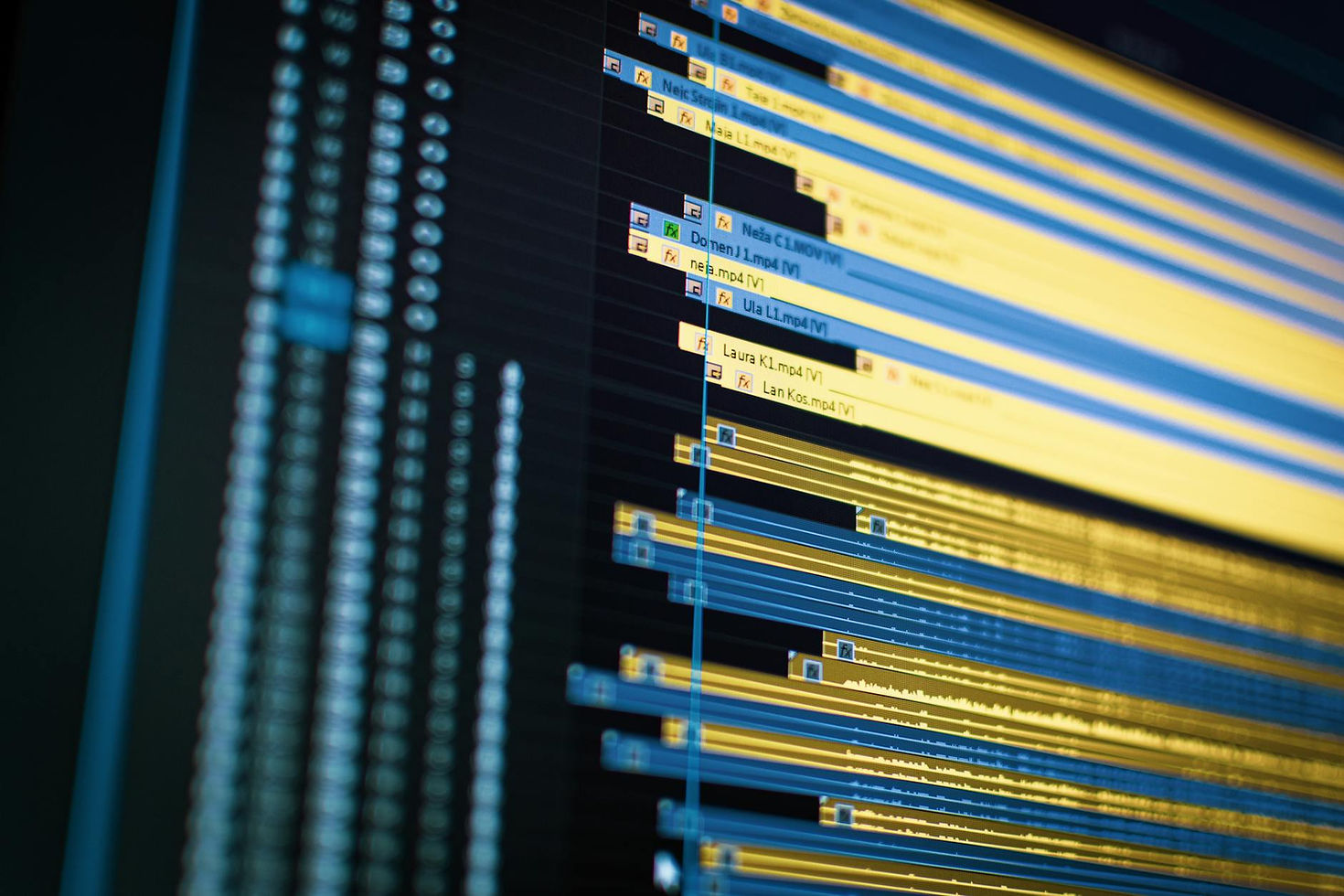
Foto de Francesco Paggiaro no Pexels
Demystifying AI in Post-Production: From Automation to Creative Empowerment
Many still perceive AI as a black box or a threat to jobs. In our practical experience, AI translates into tangible efficiency and expanded creative possibilities. Tasks that once demanded hours of manual labor – such as transcribing lengthy raw audio or searching for a specific take within vast archives – can now be accomplished in minutes. This is particularly vital for us, working with tight deadlines and project requirements, where every second saved directly impacts project viability.
Intelligent Automation: Streamlining Repetitive Tasks
The AI tools we utilize daily at Bendita Filmes are focused on automating the most tedious aspects of our work. Transcription, for instance, has become an almost automatic step. AI algorithms now deliver remarkably accurate text, enabling us to edit video non-linearly simply by editing the transcript. This fundamentally transforms the process for long-form documentaries or extensive interviews.
Real-World Example: For a documentary produced recently, we had over 50 hours of raw footage. Instead of spending weeks on manual transcription, we employed an AI platform that generated complete transcripts in under two days. The gain wasn't just in time; it significantly enhanced our ability to quickly identify the most relevant and emotionally resonant segments for the narrative, a process that would have been far more arduous and time-consuming without this automation.
The Trade-off: AI accuracy can still vary, especially with audio containing background noise, heavy accents, or multiple overlapping speakers. Therefore, the 'human touch' remains indispensable. Our editing team meticulously reviews the transcripts, correcting minor errors and refining speaker identification. AI provides a high-quality draft, allowing editors to focus on curation and storytelling.
Optimizing Workflow: From Organization to Refinement
Beyond transcription, AI assists us in organizing and refining our material. Algorithms capable of detecting scenes, objects, or even emotions within a take are powerful tools. Identifying motion or analyzing colors to maintain visual consistency across an entire project are tasks that AI performs with a speed and precision previously only achievable in ultra-high-budget productions.
Real-World Example: For a series of corporate videos for a technology client, we needed to maintain a very specific and consistent color palette across all episodes, which were filmed at different locations and times. An AI tool integrated into our editing software allowed us to analyze the dominant color of each scene and suggest automatic adjustments, ensuring visual uniformity. Previously, this stage would require a dedicated colorist for each day of footage.
Nuances: Not all automatic color correction is perfect. AI might, for example, overestimate the need for correction in well-lit scenes. Editors must possess the discernment to accept, reject, or refine AI suggestions. It's not a simple button-press; it's a collaborative process between human and machine.
Essential AI Tools in Our Daily Operations
The ecosystem of AI tools for video editing is constantly evolving. Here at Bendita Filmes, we select those that demonstrably add practical value to our projects, whether for streaming productions, independent cinema, or corporate videos. We don't use everything that emerges, but we focus on what works and delivers a return.
Integrated Software and Transformative Plugins
Integrating AI directly into professional editing software is the most effective path for us. Tools like Adobe Premiere Pro and DaVinci Resolve have invested heavily in AI features. Enhanced 'Scene Edit Detection,' 'Voice Isolation' capabilities, and intelligent masks that adapt to complex movements are examples we frequently leverage.
Real-World Example: On a music video project with numerous transitions and complex visual effects, we utilized AI functionality to isolate the lead singer in a shot with challenging lighting. The AI-generated mask saved us hours of manual rotoscoping, allowing us to apply effects more agilely and focus on image stylization.
What Tutorials Don't Tell You: The efficiency of these tools often depends on the quality of the source material and the complexity of the scene. A dimly lit, fast-moving scene might still require significant manual adjustments, even with AI.
Online Platforms and Specialized Tools
Beyond core software, we explore online platforms offering focused solutions. Tools that generate short videos from text (like advanced versions of Pictory.ai) or create avatars for narration (such as Synthesys) can be useful for projects with extremely tight deadlines and more limited budgets, especially for digital marketing content.
Real-World Example: To produce a series of short explainer videos for a client's social media channels, we used an AI platform that generates animations and narration from a script. Production speed was 3x faster than traditional methods, and the cost-effectiveness was excellent for the project's scope.
The Caveat: Creativity in these instances is more constrained, and the results can appear generic if not subject to rigorous human curation. These aren't tools to replace authorial audiovisual production, but rather to scale the creation of more direct, informative content.
Implementation Strategies for Production Companies
Adopting AI in video editing isn't just about purchasing new software; it's about rethinking processes and training your team. Our journey with AI at Bendita Filmes began with experimentation and evolved into strategic integration.
Evaluation and Prioritization: Where Does AI Truly Help?
The first step is understanding the real bottlenecks in your workflow. What consumes the most time and resources? Is it organizing thousands of photos and videos? Audio editing? Color correction? We prioritize tools that directly address these pain points.
Real-World Example: We recognized that organizing our corporate video projects, often involving dozens of hours of archive material and footage, was a significant challenge. We implemented an AI-powered tagging and organization system that analyzes video content and suggests categories and keywords, accelerating the search for specific assets in our archives.
What Beginners Get Wrong: Trying to use AI for everything without understanding the real need often leads to more correction work than efficiency gains.
Training and Human-Machine Integration
AI is a tool. The operator of that tool is human. Investing in training for our team was fundamental. Our editors learned to use AI tools not as replacements, but as accelerators. They understand AI's limitations and know when to intervene with their creative judgment.
Real-World Example: We conducted internal workshops demonstrating DaVinci Resolve's AI functionalities, focusing on the 'Magic Mask' tool for object and person isolation. Editors practiced on real projects, learning to refine AI-generated masks and integrate them into complex sequences.
The Trade-off: There's a learning curve. Not all team members will adapt with the same ease. Patience and an environment that encourages experimentation and continuous learning are crucial.
The Human Factor: Creativity, Emotion, and Narrative
AI can automate, but it cannot feel. What defines a compelling audiovisual work, be it an impactful documentary, an engaging series, or a memorable corporate video, is the ability to connect with the viewer on an emotional and narrative level. AI provides us with the tools to execute this vision more efficiently, but the vision itself is intrinsically human.
Our Philosophy at Bendita Filmes: We use AI to lift the technical burden and empower the artist. In today's production landscape, high-quality audiovisual content is that which combines technological efficiency with human soul and creative intelligence. The ultimate goal is always to tell the best possible story, in the most engaging and effective way.
The AI revolution in video editing is here to stay. At Bendita Filmes, we continue to explore and refine our techniques to deliver the best audiovisual content, always with a practical approach focused on the realities of the market.
About Bendita Filmes
Bendita Filmes is a full-service video production company and agency based in São Paulo, Brazil, specializing in:
Corporate Videos · YouTube Production · Instagram & TikTok · Advertising Campaigns · Event Filming · VFX & Animation · Live Streaming · AI Video Production · Photography


