


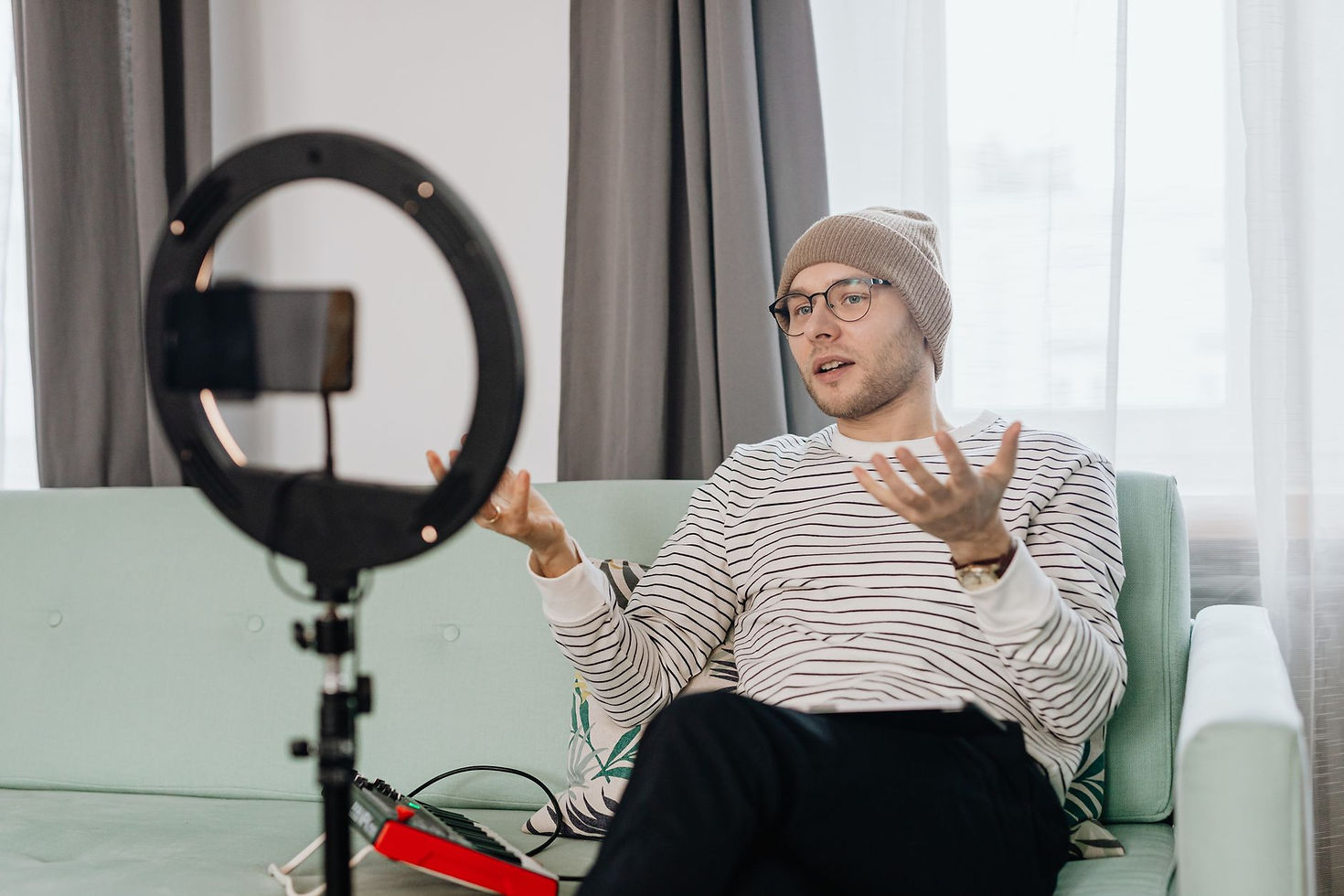
Master Live Streaming: Boost Engagement & Grow Your Brand
In today's dynamic audiovisual landscape, live streaming has solidified its place not just as a communication channel, but as a vital arena for generating genuine engagement. At Bendita Filmes, we've been immersed in audiovisual production since 2010, with a particular focus on live broadcasts. We know that simply going live isn't enough; it requires strategy, technical expertise, and, above all, a human connection that transcends the screen. This guide is the direct result of our practical experience: how to transform passive viewers into active participants, and then into potential customers and brand promoters.

Foto de RDNE Stock project no Pexels
Strategic Preparation: The Foundation of Successful Live Streams
The temptation to jump straight into broadcasting is strong, but it's during the preparation phase that the future of your live stream is defined. It's not about having the most expensive equipment; it's about clarity. Every project at Bendita Filmes begins with a detailed brief, but when the focus is live, the fundamental question is: 'What is the main objective of this broadcast?' To generate leads? To educate the market? To launch something? This definition guides all other decisions, from content to success metrics.
Understanding Your Audience and Setting Clear Goals
It might seem obvious, but how many professionals truly dedicate time to understanding who they're speaking to? Personalization is key. It's not enough to know their age; you need to understand their pain points, aspirations, and the platforms they frequent. We often say that the perfect live stream speaks the viewer's language. To achieve this, we conduct pre-event research, analyze data from previous streams, and even simulate audience profiles. For example, in a recent project for a financial client, we realized their audience was eager for discussions about investments in emerging technologies. The goal was clear: educate and position the client as an authority in this niche, generating qualified leads for their consultants. Defining clear objectives allowed us to shape the content, choose the right guests, and determine the most effective Calls to Action (CTAs).
Content Structure and Choosing the Right Platform
A well-defined structure prevents a live stream from becoming a tiring monologue. We plan in segments: an engaging introduction, development of the topic with pauses for interaction, and a conclusion with a clear call to action. The trade-off here is time: how long to dedicate to each segment without losing momentum? At Bendita Filmes, we experiment with both shorter, dynamic streams (15-20 minutes) for quick announcements and more in-depth webinars (1 hour+) for complex topics. Platform selection is also crucial. For a B2B audience seeking networking, LinkedIn Live is unmatched. For broader reach and informal interaction, YouTube Live or Instagram Live are excellent choices. Each platform has its nuances in interaction and reach.
Technical Checklist: The Basis of Credibility
Poor audio is the primary reason for live stream drop-offs. A quality lapel microphone, a reasonably soundproof environment, and a solid backup internet plan are non-negotiable. Amazing content is useless if viewers can't hear or see it properly. I recall an instance during a corporate event broadcast where the main microphone failed. We quickly switched to a secondary system and calmly informed the audience. Our agility and preparation for the unforeseen made all the difference. For us, technical quality isn't a luxury; it's the minimum expectation.
Engagement Techniques During Live Broadcasts
This is where the magic happens, but magic requires behind-the-scenes work. Real-time engagement is an art that blends technique with humanity. Statistics show that audience retention drops drastically within the first few minutes if there isn't a continuous effort to keep viewers connected.
The Importance of Eye Contact and Vocal Delivery
Looking at the camera is essential, but vocal tone is what captivates. A monotonous tone will alienate anyone. At Bendita Filmes, we train our presenters (and often the team) to use vocal variations, strategic pauses, and open body language. Greeting viewers by name when they comment, something we do routinely, creates an instant connection. For example: 'Hi, Maria, great to have you here! And John, what are your thoughts on this?' This transforms passive viewers into active participants in the conversation.
Strategic Questions, Polls, and CTAs
A live stream is a dialogue, not a monologue. We create specific moments for open-ended questions: 'What's your biggest challenge with X?' or 'How would you handle Y?' Polls are excellent for quick feedback and generating curiosity. A practical example was a live stream on audiovisual production trends where we ran a poll on which technology viewers most anticipated in the coming years. The results provided valuable insights and kept the audience engaged. CTAs should be clear and relevant to the content. If we're discussing editing, a CTA to download a free template is effective. If it's a launch, a direct link to pre-order.
Interactive Content and Collaboration
Live demonstrations, 'Ask Me Anything' (AMA) sessions, and even mini-challenges keep the audience alert. Bringing in guests is also a powerful strategy. Not just to expand reach, but to offer diverse perspectives. In a recent project, we invited an AI specialist to complement a discussion on scriptwriting. This enriched the content and attracted a new audience. The key here is curation: selecting guests who bring real value and connect well with the main presenter.
Chat Management and Authenticity
Having someone dedicated to monitoring the chat is crucial. This person not only selects the most relevant questions but also engages with comments, answers quick queries, and maintains a friendly tone. At Bendita Filmes, this is an integral part of our workflow for all broadcasts. Furthermore, humor and authenticity act as magnets. Instead of being robotic, we show who we are. A funny slip-up, a pause to breathe – all of this humanizes the brand and builds trust. For instance, during a live stream on filming techniques, one of the presenters forgot a word and laughed at himself. The audience loved it, and interaction increased.
Interactivity Tools and Audience Management
The technology available today offers a wide array of options to make live streams even richer. But, as always, the tool is a means, not an end. It's how it's used that makes the difference.
Essential Platforms and Features
Platforms like YouTube Live and LinkedIn Live natively offer chat and, in some cases, polls. For greater control, we use tools like StreamYard. It allows us to bring multiple guests on screen, add custom graphics, overlay our logo, and even multi-stream to various networks simultaneously. For more complex Q&A management, we integrate with platforms like Slido, which organizes questions, allows voting, and displays the most popular ones. The trade-off here is cost versus necessity. For beginners, YouTube Live might suffice. For a complex campaign, the investment in more robust tools pays off.
Mitigating Turnover: Keeping Viewers Connected
Audience turnover in live streams is a constant challenge. People leave because they get bored, because the quality is poor, or because the initial promise isn't fulfilled. To combat this, our strategy is clear: punctuality at the start, a dynamic pace that varies between exposition, demonstration, and interaction, and delivering on the promised value from beginning to end. We don't give everything away in the first 10 minutes and then leave the audience adrift. Each segment needs its own engagement trigger. In a live stream about audiovisual production, we divided the content into 'Pre-Production,' 'Production,' and 'Post-Production.' Each phase had its own call to action and a specific interaction moment, keeping the audience engaged until the end.
Post-Live: Turning Participants into Ambassadors
The live stream doesn't end when the 'Live' indicator turns off. At Bendita Filmes, we view the post-live period as a crucial extension of the engagement strategy. This is where conversion happens and where the relationship with the audience is consolidated.
Follow-up Strategies and Metrics Analysis
The recorded material from the live stream, if of good quality, can be re-published, edited into shorter clips, and used on other platforms. Email marketing is fundamental for sending a thank you, any promised materials, and a link to the recorded content. For us, analyzing metrics is how we learn for the next time. We don't just look at the audience peak; we examine retention, the number of questions asked, engagement in the comments, and, of course, the generated conversions (leads, sales, etc.). For example, in a live stream with a clear goal of generating e-book downloads, we analyzed the click-through rate, the number of downloads, and how those viewers behaved in the following days. If retention was low at a certain point, we know that particular content segment needs rethinking for future broadcasts.
Building Community and Generating Qualified Leads
The ultimate goal of many live streams is to convert viewers into qualified leads and, eventually, customers. This is achieved through exclusive offers for live attendees, invitations to future events, or simply by nurturing the relationship with continuous valuable content. At Bendita Filmes, we believe that consistent value delivery is the cornerstone of building a loyal community and driving long-term growth.
About Bendita Filmes
Bendita Filmes is a full-service video production company and agency based in São Paulo, Brazil, specializing in:
Corporate Videos · YouTube Production · Instagram & TikTok · Advertising Campaigns · Event Filming · VFX & Animation · Live Streaming · AI Video Production · Photography


