AI in Video Production: A Practical Guide

Artificial Intelligence (AI) is no longer a distant future but a tangible reality in the daily lives of those who produce audiovisual content. From its early adoption, AI has been consolidating as an indispensable tool for optimizing workflows, democratizing creation, and opening doors to new visual narratives. For those on the front lines of production, whether in a large studio or a boutique operation, understanding how to strategically apply AI is crucial to staying competitive and innovative.

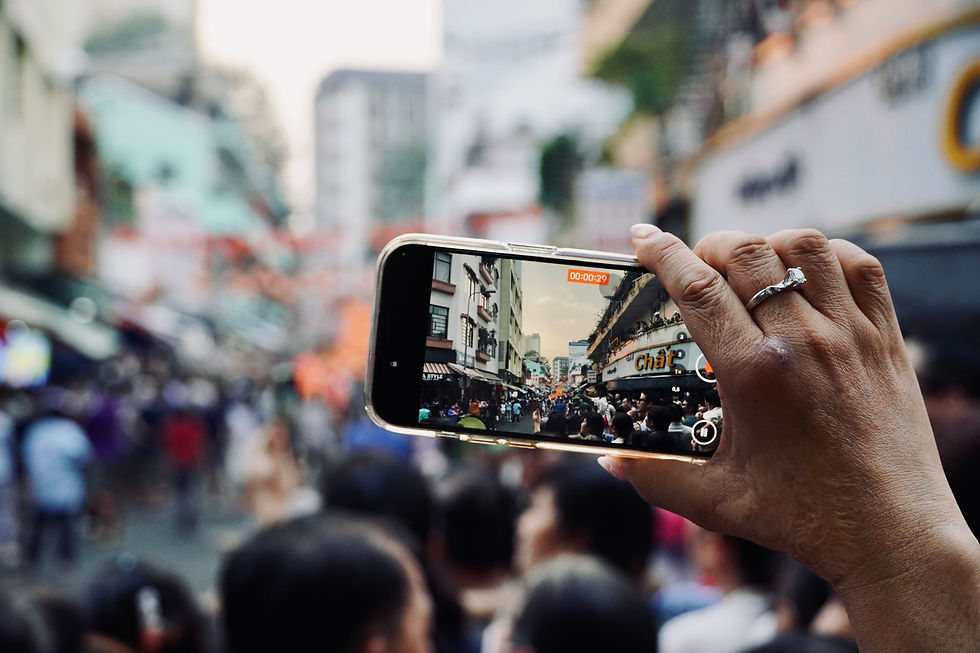
Foto de Francesco Paggiaro no Pexels
Intelligent Automation: Where AI Accelerates Production
AI truly shines when it comes to taking repetitive, time-consuming tasks off creatives' hands. Automation doesn't mean a loss of control; rather, it signifies a gain in efficiency that allows us to focus on what truly matters: artistic vision and project strategy.
Video Editing: From Selection to Rough Cut
AI tools can, with surprising accuracy, identify the best moments in a recording by analyzing motion, recognizing faces, or even detecting keywords in audio. This is revolutionary for covering events or compiling raw footage. Instead of spending hours reviewing footage, a good AI system can generate a rough cut in minutes.
Our Perspective: We see AI not as a replacement for the editor, but as a cutting-edge assistant. Features like automatic silence removal in interviews, found in tools like Descript, free up the editor to focus on narrative dynamics and emotional impact, rather than getting bogged down in tedious tasks. For instance, in a project for an education client, we used an AI tool to transcribe and segment over 3 hours of testimonials. The system presented us with the most relevant clips in seconds, accelerating the pre-editing process by nearly 40%.
The Caveat: AI can still struggle with capturing complex emotional nuances or subtle contexts. The final decision on which cuts work best, which transitions set the right rhythm, and how music dialogues with the visuals remains a human domain. It is essential for editing professionals to review and refine AI-generated material, injecting sensitivity and creative judgment.
Optimizing Captions and Accessibility
Accessibility is increasingly a cornerstone of any solid audiovisual strategy. With the growing preference for watching videos without sound on social media and the demand for inclusive content, accurate caption generation is non-negotiable. AI tools are incredibly efficient in this regard.
Our Perspective: For us, AI in subtitling is a form of democratization. We produce documentaries and educational videos that need to reach the widest possible audience, and automatic subtitling, when well-reviewed, reduces costs and increases delivery speed. A client from the non-profit sector approached us for subtitling a series of institutional videos for awareness campaigns. Using an AI-driven service, we were able to deliver the first batch of captions within 24 hours, something unachievable with 100% manual subtitling and within their budget. The metric we track most closely here is transcription accuracy, which in mature systems already exceeds 95% for clean audio.
The Caveat: AI still struggles with heavily accented speech, excessive background noise, or overlapping dialogue. Human review is always necessary to ensure accuracy and correct punctuation, which directly impacts viewer comprehension.
AI-Powered Content Generation: Expanding Creative Horizons
Beyond optimizing what we already do, AI opens doors to creating elements that previously required larger teams or more complex techniques. AI positions itself as a powerful creative partner.
Visual Elements and Concept Art
AI-powered image and video generators, such as Midjourney, DALL-E 3, and Stable Diffusion, have become valuable tools for visual conceptualization. We can use them to create rapid storyboards, develop visual concepts for characters or environments, or even generate unique graphic elements for motion graphics.
Our Perspective: While developing a documentary project about innovation, we needed to illustrate abstract concepts in a visually impactful way. Instead of waiting weeks for conceptual art, we used AI to generate dozens of concept art options in a matter of hours. Selecting and refining these images gave us a solid foundation for the motion graphics designer to work with, saving about 25% of the time in the visual conception phase.
The Caveat: AI generates based on textual prompts. The quality of the result directly depends on the clarity and specificity of your request. Furthermore, visual consistency across different generations can be a challenge, requiring an attentive curator to maintain aesthetic unity.
Synthetic Voices and Narration
Synthetic voices have reached an impressive level of naturalness. They are now a viable and often more economical alternative for narrating educational videos, corporate explainer videos, or even for prototyping scripts with audio.
Our Perspective: For a corporate video project that required multiple versions in different languages with clear and objective narration, the use of high-quality synthetic voices was a game-changer. We were able to generate narration in 3 distinct languages in just a few days, ensuring uniform pronunciation and avoiding the cost of hiring native voice actors for each version. Client satisfaction metrics regarding narration clarity were high, exceeding expectations.
The Caveat: While highly advanced, synthetic voices can still struggle to convey deep emotional nuances or replicate the exact intonation a human narrator would bring to a text with dramatic or poetic weight. For these cases, human narration remains irreplaceable.
Challenges and Nuances in Practical Audiovisual AI
Implementing AI in production workflows isn't just about installing software. It's a process that requires adaptation, learning, and a critical eye.
The Trade-off Between Automation and Creative Control
The temptation to automate everything is strong, but it's essential to know where to draw the line. When it comes to corporate videos that need to reflect a brand's soul, or documentaries with a very specific message, the human touch becomes even more vital. In large-scale projects for television networks, AI can be used for initial screening of large volumes of material, but the final assembly and rhythm construction are left to experienced editors.
Our Perspective: In a documentary series project for a streaming platform, we faced the dilemma of using AI to summarize scripts and generate synopses. While the AI delivered quick summaries, they often missed the emotional essence of the narrative that the screenwriters intended to convey. The decision was to use AI as a starting point, with an experienced screenwriter to refine it and ensure the authorial voice was maintained. The trade-off was a slight increase in development time, but the guarantee of a final product more faithful to the original vision.
Real Costs and ROI in Practice
AI tools range from free or low-cost options to robust enterprise subscriptions. The return on investment (ROI) in audiovisual AI depends on production volume and service type. For social media content creators, automation in generating video variations or captioning can yield a very high ROI. For cinema productions, usage may be more targeted and focused on specific niches like VFX or editing scenes with extensive raw footage.
Our Perspective: An e-commerce client requested the creation of short product videos for TikTok and Reels. Instead of shooting and editing each product individually, we utilized an AI platform that generates videos from static images and textual descriptions. In just a few months, we were able to deliver hundreds of videos at a drastically lower unit cost than traditional production. ROI was measured by increased sales attributed to these videos and the agility in launching campaigns quickly.
The Caveat: The cost of high-end hardware and software, or enterprise subscriptions, can be prohibitive for freelancers or small production companies without adequate financial planning. It is crucial to analyze which tools will bring the greatest benefit to your specific workflow before investing heavily.
Conclusion: AI as a Strategic Tool
AI is no longer a novelty but a powerful ally for those in audiovisual production. It offers the ability to automate tedious tasks, accelerate creative processes, and even generate unprecedented visual and audio elements. We view AI as an extension of our capabilities, a tool that allows us to be more efficient, more creative, and deliver even greater value.
About Bendita Filmes
Bendita Filmes is a full-service video production company and agency based in São Paulo, Brazil, specializing in:
Corporate Videos · YouTube Production · Instagram & TikTok · Advertising Campaigns · Event Filming · VFX & Animation · Live Streaming · AI Video Production · Photography